Define the loan before using a payment figure
A standard fixed-rate amortizing estimate needs the borrowed principal, annual rate, number of monthly payments, and a monthly compounding convention. The payment stays level under those assumptions, while the interest share usually falls as principal is repaid. CFPB explains the changing principal-interest mix.
Keep the estimate narrow
Multiply the regular payment by the number of payments to estimate all scheduled payments, then subtract the principal to estimate interest. Fees, taxes, insurance, rate resets, extra payments, and lender rounding can change a real quote. For mortgages, CFPB distinguishes principal and interest from a broader monthly payment.
Why early payments feel interest-heavy
On a standard amortizing loan, monthly interest is calculated on the outstanding balance. Early on, that balance is large, so a larger portion of the fixed payment covers interest. Later, as the balance falls, more of the same payment reduces principal. A payment figure alone does not tell you how much balance disappears in the first month. Ask for or calculate an amortization schedule to see the split over time.
Compare term changes honestly
A longer term can reduce the monthly principal-and-interest payment but commonly increases the total interest paid, as the CFPB notes. Comparing two loans therefore means looking at both the monthly obligation and the total scheduled cost under their own rates, fees, and terms. A mortgage estimate also does not necessarily include property tax or insurance. If the real agreement uses variable interest, an interest-only stage, a balloon payment, or an early repayment charge, the simple fixed-rate model is not a complete quote.
Try it with your numbers
Try a fixed-rate question with the principal, annual rate, term, and payment frequency spelled out. Read the assumptions beside the result, especially compounding, number of payments, and what is excluded. Compare the calculator’s principal-and-interest estimate with a lender quote only after checking fees, insurance, taxes, repayment features, and whether the lender’s rate is fixed.
Try it yourself
A worked example
A small illustrative loan
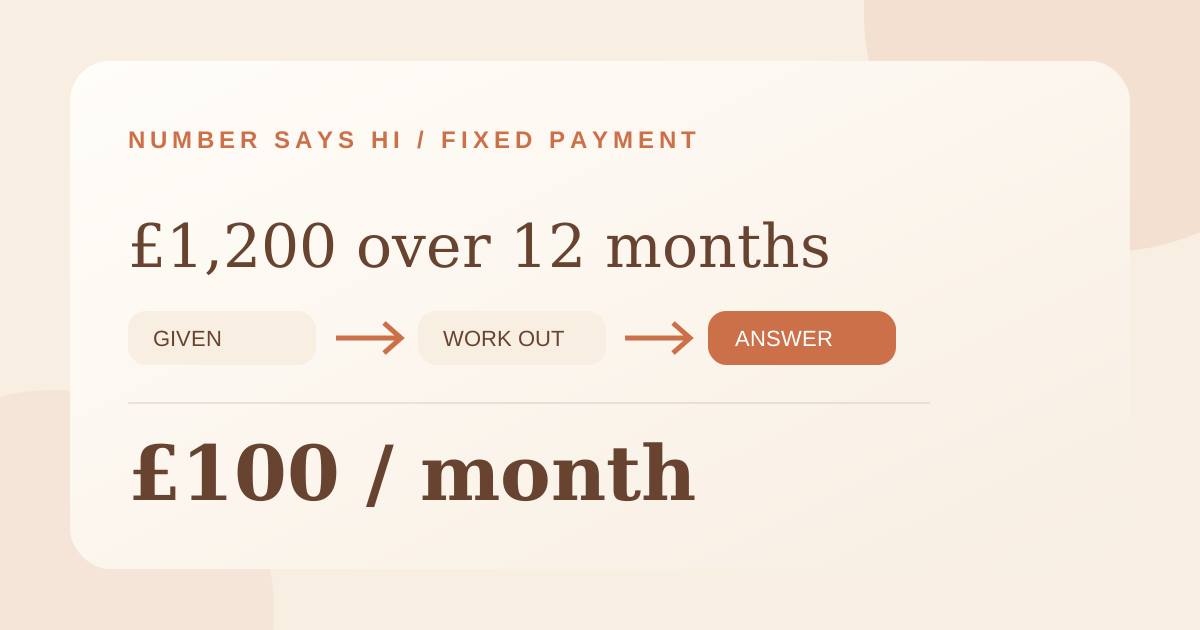
“Borrow £1,200 for 12 months at 0% annual interest. What is the scheduled monthly payment?”
- 12 monthly payments
- £1,200 ÷ 12 = £100
- £100 × 12 = £1,200 total
Sources and further reading
- What is amortization and how could it affect my auto loan?Consumer Financial Protection Bureau · accessed 2026-10-18
- How do mortgage lenders calculate monthly payments?Consumer Financial Protection Bureau · accessed 2026-10-18