Decide what is being counted
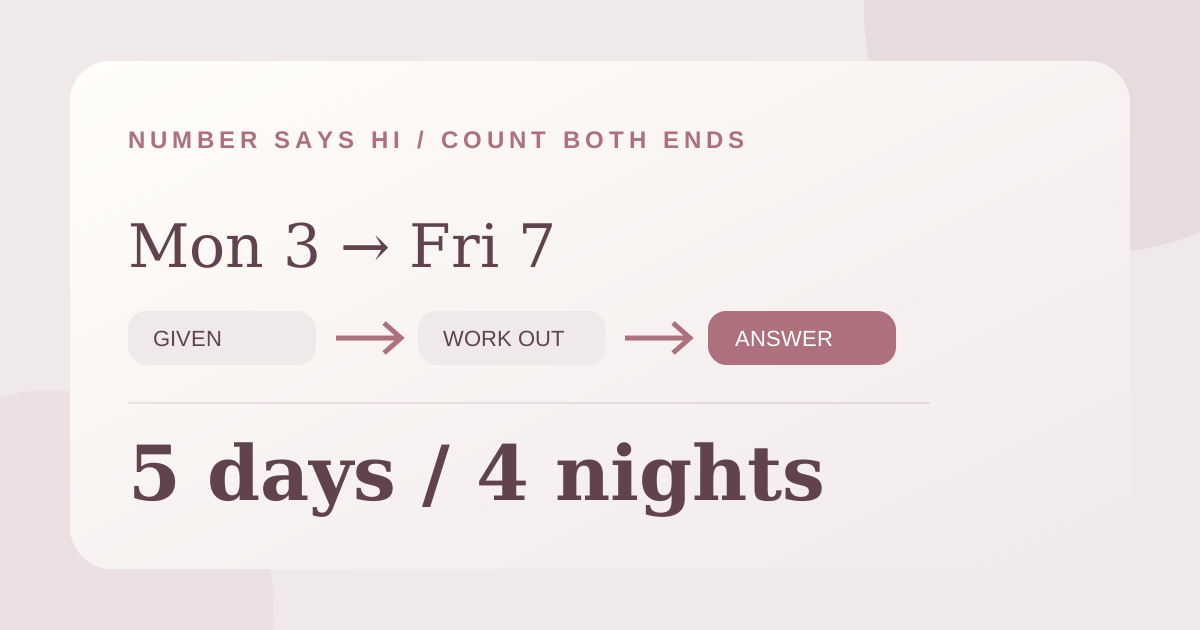
For “days from Monday through Friday, including both”, count five calendar dates. For “nights between Monday arrival and Friday departure”, count four nights. The dates are the same; the units being counted differ. State the rule before subtracting.
Watch contractual wording
A deadline or stay may define a starting day differently. This guide gives arithmetic, not a legal interpretation of a contract or official deadline. If consequences depend on the wording, use the responsible organisation’s rule and confirm whether holidays or time cutoffs apply.
Choose the endpoint rule before pressing calculate
A five-day event advertised as Monday through Friday includes both Monday and Friday. A person checking out on Friday after arriving Monday uses a room for four nights. A report measured “after five full days” may begin counting after the start instant instead. Mark a small timeline with the start and end labels; count marked dates for inclusive days and gaps for elapsed nights or days.
Handle official deadlines separately
Rules about a statutory or contractual deadline may specify that the triggering date is excluded, that the final date is extended when offices close, or that a cut-off hour applies. Plain date arithmetic cannot decide those rules. If the period matters legally or financially, quote the exact rule and date basis from the relevant authority, then use arithmetic only after the interpretation is settled. This article provides the distinction in counting methods, not a deadline ruling.
Try it with your numbers
Try “Count both 3 July and 7 July in the number of calendar dates.” If the product returns elapsed days by default, add one for an inclusive count only after checking that the dates are valid and ordered. For hotel nights, count gaps between check-in and check-out dates instead. A deadline may follow its own rule and needs that rule stated first.
Try it yourself
A worked example
Days versus nights
“From Monday 3 July through Friday 7 July, how many days and nights?”
- Calendar dates: 3, 4, 5, 6, 7 = 5
- Overnight gaps: 3→4, 4→5, 5→6, 6→7 = 4
Sources and further reading
- Explanatory Supplement to the Astronomical Almanac: CalendarsUnited States Naval Observatory · accessed 2026-10-18