Conversion is a ratio
A kilometre is 1,000 metres; a mile is a different length unit. NIST publishes conversion factors in its SI conversion tables. To convert kilometres to miles, multiply by about 0.621371. To return from miles to kilometres, divide by that factor.
Keep precision appropriate
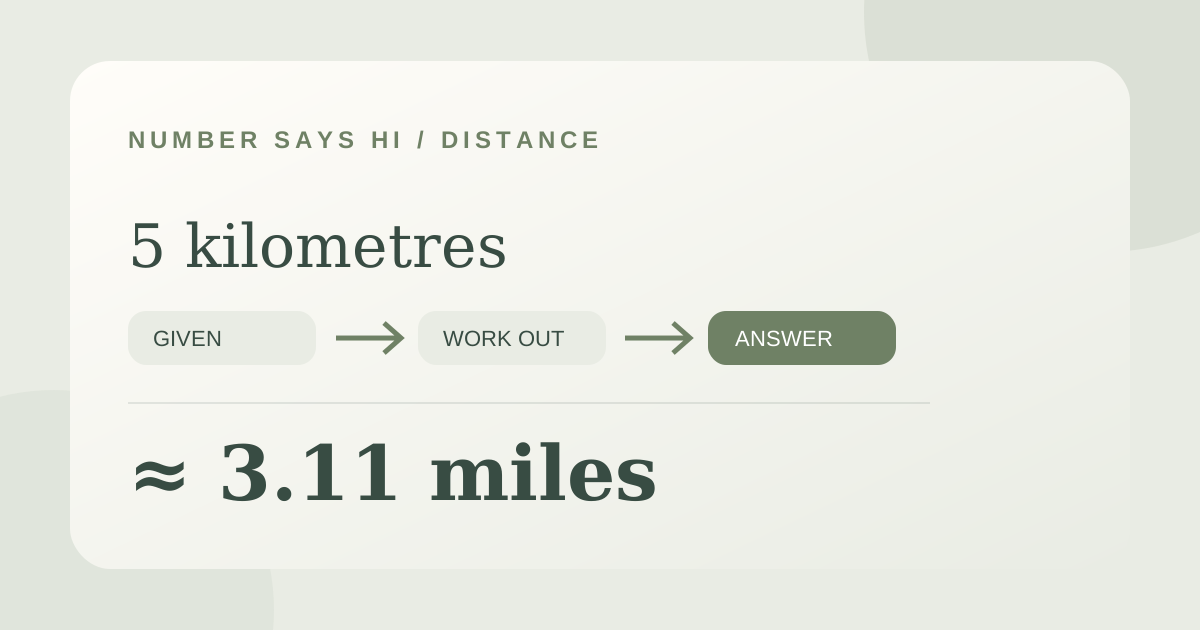
A route stated as 5 km is about 3.11 miles. More decimal places in the conversion factor do not make a measured distance more exact. For a rough walk or drive, one or two decimal places often communicate enough; keep the exact input and unit in the calculation steps.
Keep the unit in the equation
Writing 5 km × 0.621371 miles/km shows the kilometres cancel and miles remain. This simple “unit cancellation” check catches reversed conversions. If you multiply 5 miles by 0.621371, the number gets smaller, even though converting miles to kilometres should make the numerical count larger. When unsure, remember that a mile is longer than a kilometre: the same journey uses fewer miles than kilometres.
Distance is not pace or speed
Converting a route length is only one step in converting a running pace or driving speed. For example, minutes per kilometre and minutes per mile are inverse-style rates: multiply the time per kilometre by about 1.609344 to get time per mile, because a mile covers more distance. Do not reuse the plain distance direction automatically for every compound unit. Label what is being measured before choosing the factor.
Try it with your numbers
Try “Convert 5 kilometres to miles.” Spell out the source and destination units, then compare the result with the rough rule that a mile is longer than a kilometre. If you are converting speed or pace instead, say so explicitly. A number without a unit cannot be safely converted because the factor and even the direction may change.
Try it yourself
A worked example
A five-kilometre route
“Convert 5 km to miles.”
- 5 km × 0.621371 miles/km = 3.106855 miles
- Rounded to two decimals: 3.11 miles
Sources and further reading
- Guide to the SI: Conversion FactorsNational Institute of Standards and Technology · accessed 2026-10-18
- Guide to the SI: Units and PrefixesNational Institute of Standards and Technology · accessed 2026-10-18