Align the periods
Add monthly income and subtract monthly expenses and planned savings. If a bill arrives annually, divide it by 12 to make a monthly planning amount. The CFPB money-goal worksheet similarly separates income, expenses, savings, and the amount available for a new goal.
Use the remainder as a planning signal
A positive remainder is a forecast, not money guaranteed to remain. Irregular costs, variable income, and timing of payments can change it. A negative figure means planned outgoings exceed the income entered; revisit the inputs before changing commitments. Keep currency and period labels beside every number.
Turn irregular bills into a usable monthly figure
If a £360 insurance payment is due once a year, earmarking £30 a month gives a comparable planning number. If an expense arrives every four weeks, multiplying by 13 and dividing by 12 is more faithful to a year than simply calling it monthly: a £40 four-week charge averages about £43.33 per calendar month. These are planning equivalents, not changes to when the cash actually leaves your account. Keep the due date visible in any real cash-flow plan.
Stress-test one uncertain line
A budget that leaves £250 can be tested with a £100 increase in variable spending, leaving £150. This does not predict that the increase will happen; it shows sensitivity to one assumption. If income is irregular, a single typical month can conceal lean months. Use a cautious income figure or compare several months. The calculator shows a numerical remainder, while decisions about priorities and affordability remain yours.
Try it with your numbers
Try a complete arithmetic question such as “What is £2,400 minus £1,550 minus £400 minus £200?” Label each figure in your own note as income, essentials, other spending, and planned saving. The result is a scenario based on the figures supplied, not an assessment of whether the plan is affordable or a guarantee about irregular expenses.
Try it yourself
A worked example
A simple monthly view
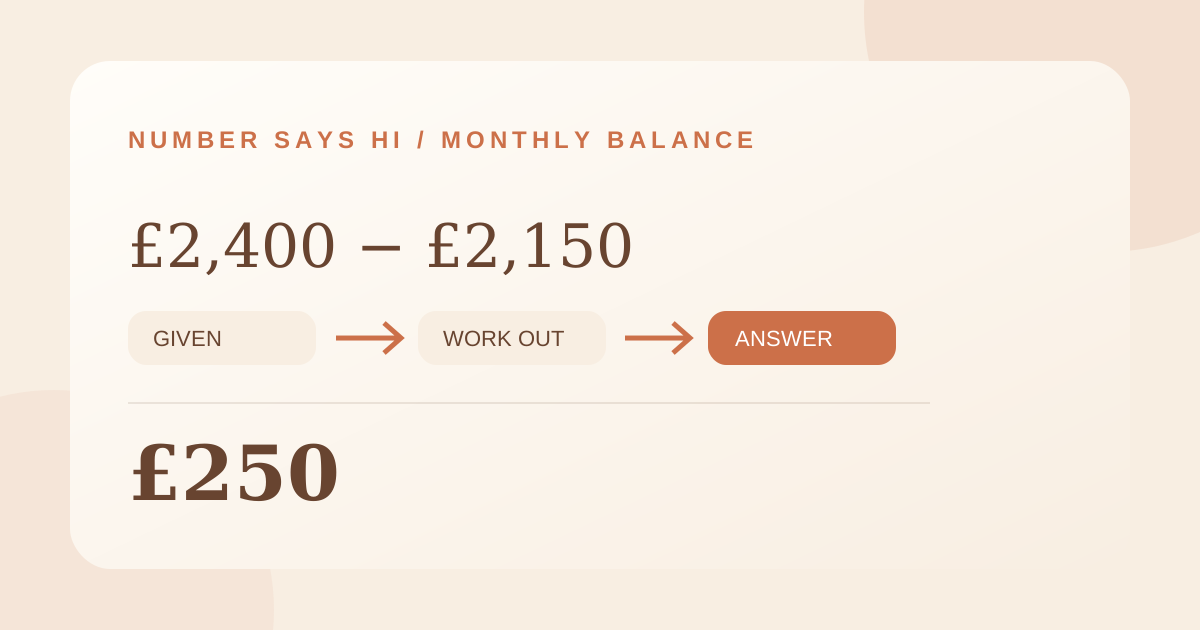
“Income £2,400; essentials £1,550; other spending £400; planned saving £200. What remains?”
- £1,550 + £400 + £200 = £2,150 planned outgoings
- £2,400 − £2,150 = £250
Sources and further reading
- My New Money Goal worksheetConsumer Financial Protection Bureau · accessed 2026-10-18