Use the old value as the denominator
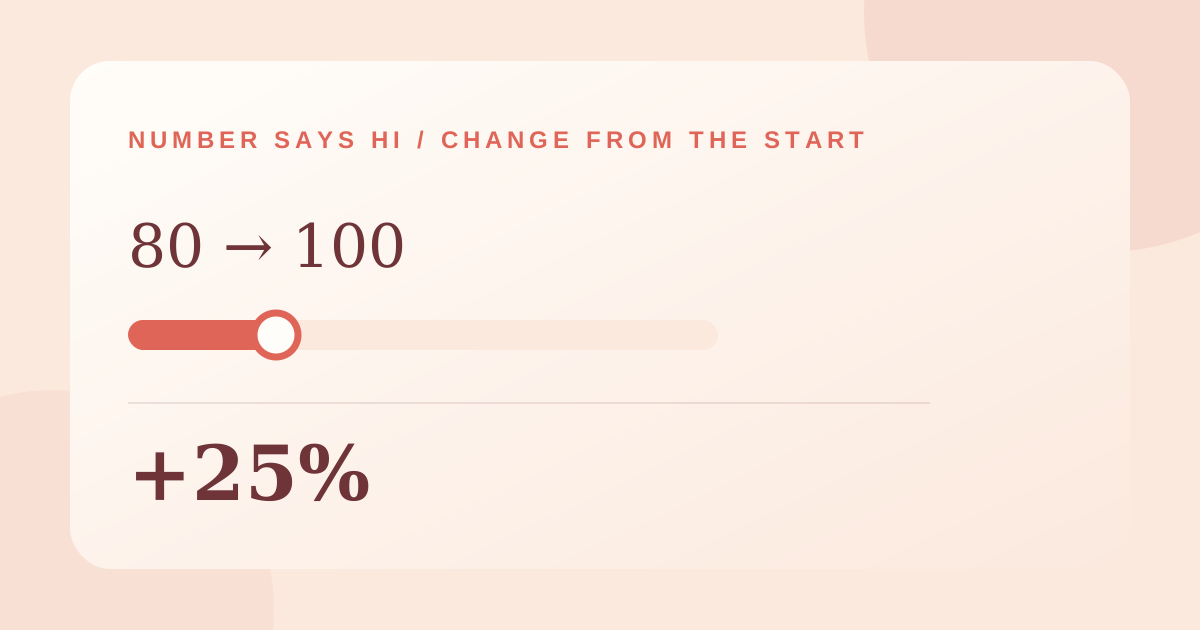
Subtract old from new, divide the difference by old, and multiply by 100. A positive result is an increase; a negative result is a decrease. The denominator matters: moving from 80 to 100 is a 25% rise, while moving back from 100 to 80 is a 20% fall. These are both correct because they use different starting values. OpenStax covers percent increase and decrease.
Read the result carefully
A change from 0 has no ordinary percentage-change result because division by zero is undefined. Also distinguish percentage points from percent change: moving a rate from 10% to 12% is two percentage points, and a 20% relative increase. State which measure you mean.
A comparison that looks symmetric but is not
Consider a value that drops from 100 to 80. The loss is 20 out of the original 100, so the drop is 20%. A later move from 80 back to 100 adds the same 20 units, but 20 is one quarter of 80, so the recovery requires a 25% rise. This is why reversing a percentage change by applying the same percentage does not usually restore the original value.
When to use points instead
For two quantities already expressed as percentages, direct subtraction gives percentage points. If a survey share moves from 10% to 12%, the change is 2 percentage points. Relative to the original 10%, it is a 20% increase. Either measure can be useful, but leaving out the denominator makes headlines and comparisons misleading. If the old value is negative, a conventional “percent increase” may be hard to interpret; report the absolute change and context as well.
Try it with your numbers
Try “What is the percentage change from 80 to 100?” Put the old value first and the new value second. If you switch the order, expect a different percentage because the reference base changes. When the inputs themselves are percentages, specify whether you want a relative percent change or a percentage-point subtraction.
Try it yourself
A worked example
A price rises
“A subscription rose from £80 to £100. What is the percentage change?”
- £100 − £80 = £20
- £20 ÷ £80 = 0.25
- 0.25 × 100 = 25%
Sources and further reading
- Prealgebra 2e: Solve General Applications of PercentOpenStax · accessed 2026-10-18