Build the total before splitting
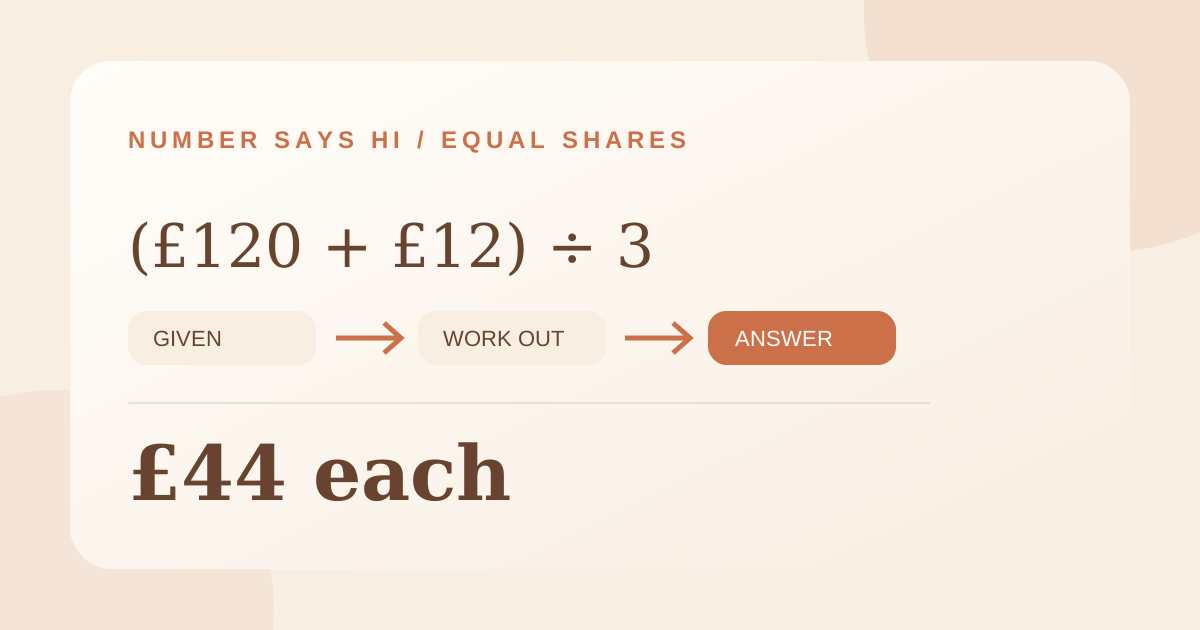
Write down the bill amount, the tip percentage, and the number of people. A tip based on a £120 bill at an illustrative 10% is £12; £132 divided among three is £44 each. OpenStax uses a restaurant tip to explain percentages.
Agree on the base
A tip can be based on the pre-tax or post-tax amount. Confirm which figure your group is using and whether a service charge is already included. The arithmetic cannot make the social choice for the group. If the total does not divide evenly to the smallest currency unit, agree who handles the remaining penny or cent.
A different tip base changes the result
Suppose a receipt shows £120 for food and a separate £10 charge, and the group chooses to tip 10% of food only. The tip is £12, not £13. If everyone agrees to split the resulting £142 among three, the exact mathematical share is £47.333…, so a practical currency split is £47.33, £47.33, and £47.34. Put the base and the final total in the question to avoid an apparently precise but disputed answer.
Decide what equal means
Equal sharing assumes each person pays the same fraction of the whole bill. It does not account for who ordered what. If drinks or meals differ substantially, use the proportional method in the related guide or calculate each person’s share separately. Check whether the receipt already contains a service charge before adding a tip. The guide’s 10% is a sample input, not a recommendation about how much to tip anywhere.
Try it with your numbers
Try “Split £120 between 3 people with a 10% tip on £120.” Naming the tip base removes a common ambiguity. If you have a service charge already on the bill, omit an additional tip unless your group intends one. For shares that do not divide to exact pennies, agree the final rounding allocation after reading the unrounded steps.
Try it yourself
A worked example
Three equal shares
“Split £120 among three people plus 10% tip on £120.”
- £120 × 0.10 = £12 tip
- £120 + £12 = £132 total
- £132 ÷ 3 = £44
Sources and further reading
- Prealgebra 2e: Solve General Applications of PercentOpenStax · accessed 2026-10-18